
Key Takeaways
- NACE International and SSPC merged in 2021 to form AMPP, the Association for Materials Protection and Performance. Legacy NACE and SSPC standards remain in use and are now maintained by AMPP.
- Standards define the work. Qualifications define who is allowed to do it. A good spec addresses both, separately.
- AMPP QP accreditation (formerly SSPC QP) evaluates a contracting company. Certifications like the Coatings Inspector Program (CIP) evaluate individual people. They are not interchangeable.
- Tie your qualification requirements to the risk of the asset and verify every credential a bidder lists.
If you’re specifying industrial coatings, you’ve probably encountered NACE, SSPC, and AMPP in the same project documents, sometimes as if they were interchangeable. One calls for SSPC-SP 10. Another specifies NACE No. 2. A newer specification references AMPP. Then the contractor qualifications section asks for a “NACE-certified” contractor, language that sounds specific but may leave bidders wondering exactly what qualification the owner expects.
The organizations behind many of the industry’s most widely used protective-coating standards underwent a major change in 2021, when NACE International and SSPC came together under AMPP, the Association for Materials Protection and Performance. The standards themselves did not simply disappear, but specifications, certifications, and industry terminology have not always kept pace with the transition.
That matters when you’re writing a project specification. Vague or outdated language can invite substitutions, make bids difficult to compare, and create disputes over whether a contractor meets the owner’s requirements.
Here’s how NACE, SSPC, and AMPP fit together, and how to write coating standards and contractor qualification requirements that are clear, current, and enforceable.
Where NACE, SSPC, and AMPP Came From
NACE started out as the National Association of Corrosion Engineers, with roots in pipeline corrosion and cathodic protection. Over the decades, it built a large body of standards and became best known in the coatings world for its Coating Inspector Program.
SSPC began as the Steel Structures Painting Council and later became the Society for Protective Coatings. Its focus was narrower and more hands-on: surface preparation, coating application, and the contractors doing the work. SSPC wrote most of the surface preparation standards specifiers cite every day, and it created the QP contractor accreditation programs.
For years the two organizations overlapped. They co-published several surface preparation standards, which is why you’ll see joint designations like SSPC-SP 10/NACE No. 2 for near-white metal blast cleaning. In 2021, they merged into a single body, AMPP. The standards, training programs, and accreditations from both sides now live under one roof.
What the Merger Changed (and What It Didn’t)
For specifiers, the practical impact of the merger is smaller than the name change might suggest. A near-white blast is still a near-white blast. The core technical requirements for surface preparation did not suddenly change in 2021, and legacy designations remain familiar to contractors, inspectors, and coating manufacturers.
What changed more noticeably is the branding, administration, and maintenance of the standards and qualification programs. Newer editions and program documents carry the AMPP name, sometimes alongside a legacy designation. You may see references such as AMPP SSPC-QP 1, for example. Likewise, the qualification programs formerly known as SSPC QP programs are now administered as AMPP QP programs.
There is one simple change worth making to your specification boilerplate: identify standards by their designation and require the current edition in effect at the time of bid. That keeps a specification written in 2018 from inadvertently locking a 2026 project to an outdated edition.
Standards vs. Qualifications: Two Separate Questions
A coating specification needs to answer two different questions: What work must be performed, and who is qualified to perform it? Those requirements are related, but they are not interchangeable. Keeping them separate makes your specification clearer and your contractor requirements easier to enforce.
- Standards describe the work product. How clean the steel has to be, what profile is acceptable, how film thickness is measured, how many readings per area, what counts as a pass. They apply no matter who is holding the nozzle.
- Qualifications describe who is allowed to perform or inspect that work. They answer a different question: does this company, and these people, have the training, procedures, and track record to hit the standard consistently?
A spec can reference every right standard and still get poor results if it lets anyone bid. It can also demand impressive credentials and still fail if the acceptance criteria are vague. You need both pieces, written clearly and kept in their own sections.
Company-Level Accreditation: The AMPP QP Programs
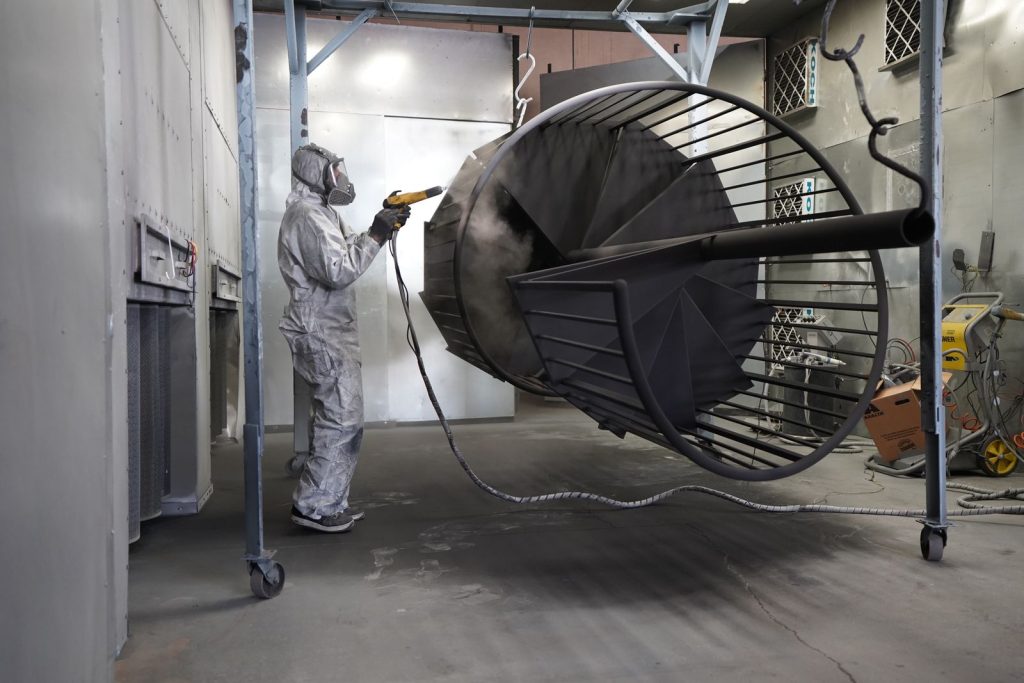
The QP programs evaluate a contracting firm as an organization. Accreditation involves a documented quality program, technical and safety procedures, personnel qualifications, and an on-site audit of work in progress. The programs most relevant to industrial owners include:
- QP 1: Field surface preparation and coating application on complex industrial and marine structures.
- QP 2: Field removal of hazardous coatings, such as lead paint. A contractor must hold QP 1 before it can earn QP 2.
- QP 3: Shop painting, built around controlled shop operations rather than field work.
- QP 8: Polymer coatings and surfacings on concrete and other cementitious substrates.
- QP 5: Accreditation for coating and lining inspection companies.
- QS 1: An advanced, ISO 9001-based quality management layer on top of the base accreditation.
DOTs, large utilities, and many owners of bridges and water storage tanks require QP accreditation on public work. For a critical asset with a long design life, it’s a reasonable bar. For a modest maintenance recoat inside a plant, it may shrink your bid list without adding much protection. Match the requirement to the consequence of failure.
Individual Certifications: Who Is on the Job
Company accreditation tells you whether a contractor has the systems, procedures, and personnel to perform the work. Individual certification focuses on the qualifications of the people performing or inspecting it. AMPP offers credentials for several roles. The individual certifications most commonly encountered in coating specifications include:
- Coatings Inspector Program (CIP): The successor to the NACE inspector program, with tiers for Basic, Certified, and Senior Certified Coatings Inspector. This is the credential most specs mean when they say "NACE-certified inspector."
- Coating Application Specialist (CAS): A certification for experienced industrial applicators.
- C7 and C12: Credentials for abrasive blasters and spray applicators.
This is where the phrase “NACE-certified contractor” falls short as specification language. It could mean one person on staff holds an inspector certification, or that several crew members do. It does not tell you which credential they hold, what role they are qualified to perform, or whether that person will be on your project.
If certification matters to the project, specify the credential, the required role, and the presence requirement. For example, state whether a certified individual must be on site during surface preparation, coating application, inspection, or specific hold points.
It is also important to keep contractor quality control (QC) separate from independent quality assurance (QA). The contractor should have qualified personnel checking its own work as part of its QC program. On critical projects, the owner may also want an independent AMPP-certified Coating Inspector Program (CIP) inspector to verify the work at designated hold points. One is the contractor’s responsibility; the other provides the owner’s independent verification.
Writing Qualification Language That Holds Up

A few practical habits make the qualifications section enforceable:
- Name the exact program (for example, AMPP SSPC-QP 1) instead of "SSPC-certified" or "NACE-approved."
- Specify which roles need which individual certifications, and require their presence for defined activities.
- Require bidders to submit accreditation status and certification numbers with the bid, then verify them with AMPP.
- Define inspection hold points and the documentation you expect: surface prep records, ambient conditions, wet and dry film thickness readings, batch numbers, and holiday test results for linings.
- Set your requirements at the pre-bid stage, not after award, so every bidder prices the same job.
Catching an unenforceable clause during design costs nothing. Catching it during a coating failure costs a lot.
Work With a Contractor Who Knows the Standards
A coating system is only as good as the specification behind it and the contractor’s ability to install that system as written. BlasTek is a specialty industrial blasting and coating contractor based in Shelbyville, Michigan, with NACE-certified technicians and a pre-construction process that starts with reviewing the specification before a bid is committed.
We work with engineers, owners, and specifiers to identify compatibility concerns, confirm that the specified system fits the service environment, and make sure surface preparation, application, inspection, and documentation requirements are practical for the project. By addressing those details before work begins, we help reduce surprises during the bid, shutdown, and application phases.
If you’re writing or reviewing an industrial coating specification, call (616) 243-7550 or request a free quote to learn more about BlasTek’s industrial coating services and discuss your project with our team in Grand Rapids, MI, Northern Indiana, Southern Illinois, Three Rivers, MI, Kalamazoo, MI, Ohio and Southwest and Northern Michigan.
Guide to Coating Standards and Contractor Qualifications FAQs
Are NACE and SSPC standards still valid after the AMPP merger?
Yes. Legacy NACE and SSPC standards are still referenced and are now maintained by AMPP. Specifiers should cite the standard by number and require the current edition in effect at the time of bid.
What is the difference between AMPP QP 1 and a NACE certification?
QP 1 accredits a contracting company based on its quality program, procedures, and an on-site audit of field work. NACE (now AMPP) certifications such as the Coatings Inspector Program apply to individual people. A company can employ certified individuals without holding QP accreditation.
What does "NACE-certified inspector" mean in a coating spec?
It usually refers to a person certified under the Coatings Inspector Program, now administered by AMPP. A clear spec names the required CIP level and states whether that inspector works for the contractor or independently for the owner.
Should every industrial coating project require QP accreditation?
Not necessarily. QP accreditation is standard on DOT, bridge, and many water storage projects. For smaller maintenance work, owners often get better value from clear standards, defined hold points, and independent inspection. Base the requirement on the asset’s criticality and the cost of a coating failure.